
The Biggest Digestive Mistake Happens Before the First Bite

You sit down to lunch while answering an email. Or perhaps “sit down” is generous. You’re standing at the kitchen counter, checking your phone, thinking about the meeting in ten minutes, and eating something vaguely resembling lunch.
Sound familiar?
We tend to think digestion begins once we start eating. Food goes in, the stomach gets to work, and digestion is officially underway.
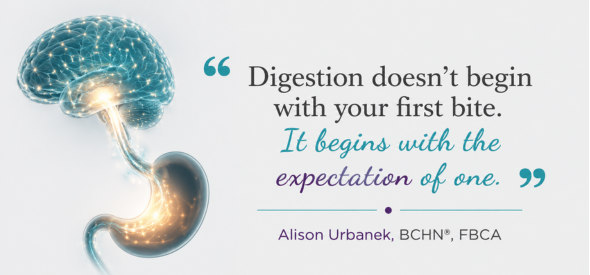
Except your digestive system was supposed to get started before that first bite ever arrived.
Your brain uses the sight, smell, taste, and even the anticipation of food to begin preparing your digestive system for what's coming. Saliva starts flowing. Your stomach begins preparing. Digestive secretions get involved.
In other words, your body doesn't wait for lunch to crash through the front door before figuring out what to do with it. It prepares.
And there's a name for this surprisingly important warm up act: the cephalic phase of digestion.
Your Brain Starts Digestion Before Your Stomach Does
“Cephalic” simply means relating to the head, which gives you a clue about who’s running this part of the show.
When you see food, smell it, taste it, or even anticipate eating it, your brain begins preparing your digestive system for what’s coming.
This early communication helps stimulate saliva, stomach acid, pancreatic secretions, and other digestive activity before and during the first stages of a meal.
Your digestive system isn’t waiting around for the food to arrive before getting to work.
It prepares.
And rather than just taking my word for it, let’s see if we can catch your digestive system doing it.
Try This Before You Read Any Further

Close your eyes for a moment and imagine walking outside and picking a ripe yellow lemon from a tree.
It has been sitting in the sun, so the skin feels warm in your hand. Run your thumb across it. Can you feel the little dimples in the peel?
Now bring the lemon into the kitchen.
Roll it firmly beneath your palm. As it begins to soften, can you smell the citrus oil released from the peel?
Take out a knife and slice straight through the middle.
The bright citrus smell gets stronger. Juice runs onto the cutting board.
Pick up one half and squeeze it slightly, watching the juice collect along the cut edge.
Now bring it toward your mouth
.
Stick out your tongue and bite directly into that juicy lemon.
Pause.
What’s happening in your mouth right now?
If you’re suddenly swallowing, salivating, or feeling that unmistakable little tightening around your jaw, congratulations.
Your digestive system just responded to food that doesn’t exist.
There was no lemon. Nothing entered your mouth. Nothing reached your stomach.
But your brain received enough information from simply imagining food to trigger a physical response.
And here’s the really interesting part: saliva is simply the digestive response you can notice.
Similar anticipatory communication is happening farther down the digestive tract, helping prepare gastric and pancreatic secretions for the food your brain believes is on its way.
That is the cephalic phase of digestion.
Your Nervous System Is Sitting at the Table Too
Much of this preparation involves communication through the parasympathetic nervous system, including the vagus nerve.
You may have heard this described as “rest and digest,” but I think that phrase sometimes makes digestion sound as though you need to eat lunch in a candlelit spa while listening to ocean sounds.
You don’t.
What matters is understanding that your nervous system and digestive system are constantly communicating.
When your brain recognizes that food is coming, it begins coordinating some of the machinery needed to break that food down.
That’s very different from inhaling lunch between phone calls while your brain is simultaneously trying to solve six other problems.
Stress Doesn’t Turn Digestion Off
I want to be careful here because this is where wellness advice can get a little dramatic.
Having a stressful day doesn’t mean your stomach suddenly forgets how to digest food. Human beings wouldn’t have lasted very long if digestion required perfect tranquility.
But your autonomic nervous system helps regulate digestive secretions and gastrointestinal movement. Chronic stress, rushing, distraction, and repeatedly eating while highly activated can influence that digestive environment.
For someone already dealing with bloating, reflux, uncomfortable fullness, or unpredictable digestion, that’s worth considering.
Not because your symptoms are “all in your head.”
Quite the opposite.
Your head is physically connected to your digestion.
Why This Matters Beyond the Meal
Digestion isn’t simply about moving food from one end of you to the other.
Eating nutritious food is only half the equation. Your body still has to break that food down before it can use what’s inside it.
Proteins need to be broken down into amino acids. Fats need to be emulsified and digested. Vitamins and minerals need to become available for absorption.
So when I look at digestive health, I’m interested in much more than what someone eats. I also want to know how well the digestive process is functioning when that food arrives.
That’s one reason two people can eat similarly nutritious diets and have very different experiences afterward.

Before you buy another digestive supplement, experiment with something decidedly less glamorous.
Give your digestive system time to realize dinner is coming.
Choose one meal each day this week and, instead of arriving at it at approximately 70 miles per hour, create a small transition between whatever you were doing and eating.
Start before you sit down. If you're cooking, notice what's happening as you prepare the meal. Smell the garlic hitting the pan. Notice the herbs as you chop them. Taste the dressing before you pour it over your salad. Those sights, smells, and tastes aren't just part of cooking. They're sensory information telling your brain that food is on the way.
If someone else cooked, you haven't missed your opportunity. Once the food is in front of you, take a moment to actually look at it and smell it before you dive in. Remember the lemon? Your brain doesn't need food in your stomach before it starts responding to what's in front of you.
Then take five slow breaths. Not because five is a magical digestive number, but because you're creating a deliberate pause between doing and eating. Put your phone somewhere you can't absentmindedly pick it up. Let the email wait. Your inbox has survived this long without your supervision.
You might also take a moment for gratitude. It doesn't need to be elaborate or particularly profound. Appreciate the person who prepared the food, the farmers who grew it, or simply the fact that you have a nourishing meal sitting in front of you. The point is to give your brain a moment to shift its attention toward the meal rather than dragging the entire day to the dinner table with you.
And then, give the first few bites your attention. Notice the flavor. Notice the texture. Notice whether you're salivating. You don't have to spend the entire meal contemplating every chickpea. We're not trying to turn Tuesday lunch into a spiritual retreat.
We're simply restoring some of the sensory cues and anticipation that naturally belong at the beginning of digestion.
Try this with one meal a day for a week and pay attention to what happens afterward. Pay attention to what happens afterward. Does the meal feel any different? Do you notice anything about your pace, fullness, bloating, reflux, or overall comfort? You may notice a difference or you may not. Either way, you've learned something useful about your digestion.
Because five breaths aren't a treatment for digestive problems, and they certainly aren't going to fix low stomach acid, inadequate enzyme production, dysbiosis, or another underlying issue.
But they can help you stop treating eating like one more task to squeeze between everything else.
Your digestive system has a warm up phase. Give it a chance to use it.

When Digestion Still Doesn’t Feel Right
If you’re slowing down, eating nourishing foods, and still dealing with bloating, reflux, constipation, diarrhea, or uncomfortable fullness, it may be time to look deeper. I often work with people dealing with exactly these kinds of lingering digestive issues, sometimes alongside the frustration of simply not knowing what to eat anymore.
In a Health Strategy Session, we can talk through your symptoms, patterns, nutrition, and what you’ve already tried, then consider whether additional testing or a more personalized approach could help uncover what may be getting in the way.
The goal isn’t to make eating another thing you have to get “right.”
It’s to help you understand your body so you can move toward more comfortable digestion, more confidence around food, and more freedom to get on with your life.
Because feeling better should feel possible—with the right approach.
Curious About Your Digestion?
Take the Digestive Health Assessment to get a clearer picture of what may be going on beneath the surface. It’s a simple way to start connecting the dots.


Comments