
Your Gut Is Bored: Why Eating the Same Healthy Foods Isn't Enough

You cleaned up your diet. You found a breakfast that doesn't leave you bloated. You discovered three lunches you can reliably digest, and frankly, you're not messing with a good thing.
So you eat them.
Again.
And again.
And again.
Your routine may appreciate the predictability. Your gut microbes, however, would like to discuss the menu.
When people start thinking about gut health, fiber usually gets top billing. And yes, fiber matters. But simply asking, "Am I getting enough fiber?" misses something fascinating about the way your microbiome works.
Your gut doesn't only care how much plant food you eat. It cares how many different kinds show up.
And one reason has to do with compounds called polyphenols.
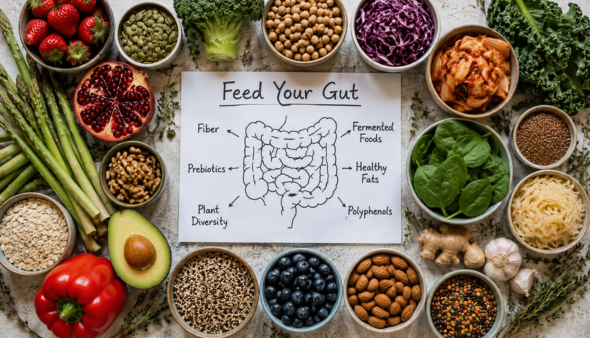
Polyphenols Are Not Just Another Nutrition Buzzword
Polyphenols are compounds plants make for their own protection. They help plants respond to things like ultraviolet light, pests, pathogens, and environmental stress.
Conveniently for us, they don't stop being interesting once the plant lands in our salad bowl.
Many polyphenols aren't completely absorbed in the small intestine. That means a significant portion continues into the colon, where your gut microbes get involved. Certain microbes can transform these plant compounds into smaller metabolites, while polyphenols themselves can influence which microbial populations thrive.
In other words, you feed your microbes, and your microbes help process what you've eaten.
It's less like dropping fertilizer on a lawn and more like catering a very complicated dinner party. Everybody isn't reaching for the same appetizer.
This Is Where Color Gets Interesting
Different plants contain different families and combinations of polyphenols. That’s one reason no single “superfood” can do the whole job.
Berries and purple cabbage provide anthocyanins. Cocoa, tea, apples, and grapes contain various flavanols and related compounds. Olives and extra virgin olive oil bring their own phenolic compounds. Then there are herbs, spices, onions, leafy greens, colorful vegetables, and dozens of other plant foods bringing different compounds to the microbial buffet.
This is why I don't want you leaving this article thinking, "Fine. Apparently I need to eat blueberries every day now."
We've rather missed the point if we simply replace one nutritional obsession with a prettier one.
The magic isn't one color.
It's variety.
Not perfection.
Not one “superfood.”
Not eating blueberries every single morning because someone on Instagram told you to.
It’s exposing your gut to a wider variety of plants over time.
A bowl of blueberries is wonderful. But blueberries, parsley, red onion, cocoa, green tea, lentils, oregano, purple cabbage, and apples expose your gut microbiome to a much broader collection of plant compounds.
That matters because a diverse microbial ecosystem tends to be a more resilient one.
Your Gut May Need Variety, Not Another Food Rule
In my practice, I often meet people who have become understandably cautious around food. When you've dealt with bloating, reflux, constipation, diarrhea, or unpredictable digestion long enough, finding a few foods that don't cause trouble can feel like winning the lottery.
The problem is that your diet can gradually become smaller and smaller.
Supporting gut health isn't about forcing foods your body clearly doesn't tolerate. But once we've identified what's driving the digestive trouble, one of our longer term goals is often helping someone expand their food world again, rather than living indefinitely on the same handful of "safe" foods.
Because freedom with food matters too.
September has a funny way of putting meals on autopilot. Suddenly the kids are back in school, routines return, calendars fill up… and before you know it you've eaten the same breakfast four days in a row.
You don't need to completely reinvent your diet. Instead, start looking for small ways to give your gut microbes more variety to work with.
Start with what you already eat. If oatmeal is your usual breakfast, don't replace it. Rotate what goes on top. Blueberries one day, chopped apple and cinnamon the next, raspberries another day. The goal isn't a "perfect" breakfast. It's exposing your microbiome to a wider variety of plant compounds over time.
Swap one familiar plant for a different one. Always buy spinach? Grab arugula or kale this week. Usually roast broccoli? Try red cabbage, Brussels sprouts, or cauliflower. If blueberries are permanently living in your refrigerator, invite blackberries or cherries over occasionally. Variety doesn't have to mean unfamiliar food.
Stop treating herbs and spices like decoration. Parsley, basil, cilantro, oregano, turmeric, cinnamon, ginger, and other herbs and spices bring their own polyphenols to the table. A handful of fresh herbs tossed into a salad or a generous shake of spices into dinner is an easy way to increase plant diversity without adding another side dish.
Use the “one more plant” rule. Before you eat, look at your meal and ask what you could easily add. Toss chickpeas onto a salad. Add onions to scrambled eggs. Sprinkle pumpkin seeds over soup. Throw leftover vegetables into a grain bowl. Tiny additions count.
And if your diet has become very limited because certain foods leave you bloated, uncomfortable, or running for the bathroom, don't turn this into a challenge to force down twenty new vegetables by Friday. Food variety is something we can build thoughtfully while also asking why your gut has become so reactive in the first place.
For this week, keep it simple: add one new color each day and see how many different plant foods you can enjoy by Sunday. No calorie counting. No spreadsheet required. Your gut microbes are not grading you.
They're just hoping dinner gets a little more interesting.

Need Help Making Sense of Your Gut?
If your digestion has become so unpredictable that adding more variety feels easier said than done, there may be more to the story. Bloating, reflux, constipation, diarrhea, food reactions, and that frustrating feeling that you’re “not sure what to eat” can all make a colorful, varied diet feel surprisingly complicated.
That’s where looking at the bigger picture matters. In a Health Strategy Session, we can talk through what you’re experiencing, what you’ve already tried, and whether testing or a more personalized approach could help uncover what may be getting in the way.
The goal isn’t to hand you another list of foods to avoid. It’s to help you understand your body better so you can move toward more confidence, more variety, and more freedom with food.
Ready to get some clarity? Schedule your Health Strategy Session and let’s figure out your next best step.
Because feeling better should feel possible—with the right approach.
Curious About Your Digestion?
Take the Digestive Health Assessment to get a clearer picture of what may be going on beneath the surface. It’s a simple way to start connecting the dots.


Comments